A fuse is a very common form of safety protection built into many different electrical circuits, and this has the objective of shutting down a circuit when the live current flow exceeds a specific level. This prevents electric shock, overheating and fire. A fused test lead works in the same way, by providing an additional layer of protection for the user undertaking an electric test using a test instrument, in the event of excessive currents or short circuits.
So a fused test lead is a test lead that has an integral fuse. This fuse could be built into the probe or the body of the instrument itself. Test leads are essential for many forms of electrical testing because they provide a safe connection between the test instrument and the item or circuit being tested. They are commonly used with instruments such as multimeters. All fuses are rated for a specific amperage and voltage, meaning that is the maximum current flow they can withstand before blowing and shutting down the circuit. Therefore, a fused test lead must be appropriate for the expected amperage and voltage of the circuit under test, and if this is the case, the fused test lead will protect the user from electric shock and the possibility of fire by immediately disconnecting the circuit when a short circuit or a fault has occurred.
Why do we use a fused test lead?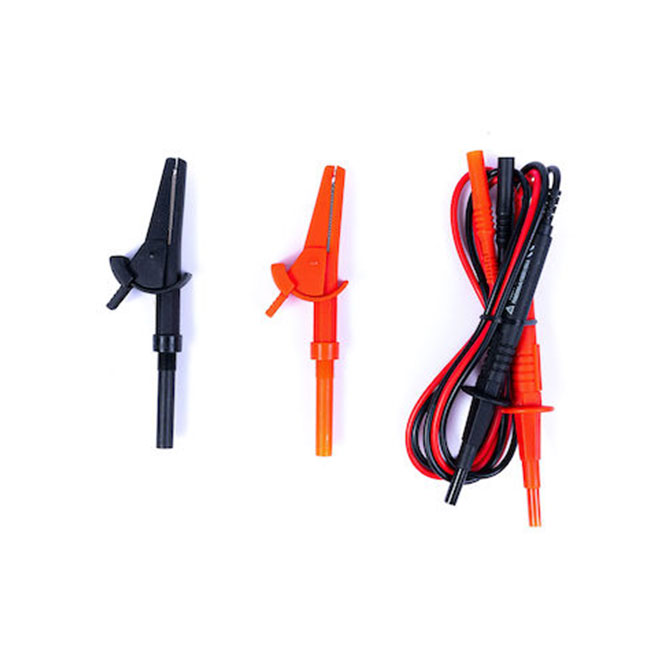
Although test leads are insulated to protect the user, a fused test lead provides an additional layer of protection in the event that an electrical tester selects the wrong setting on their instrument, or the insulation on the test lead is insufficient. Most modern test instruments, such as the multi-function testers supplied by Test Instrument Solutions, comply with the necessary current safety standards and have robust safety features built into their design. And the user is also protected when using the test leads supplied with that instrument.
So it is recommended that fused test leads are used where test instruments do not comply to common standards such as BS EN IEC 61010 or BS EN 61557 / BS EN IEC 61557, because the fused test leads will provide the layer of protection the user needs. However, it is generally recommended that fused test leads are always used as an extra layer of precaution, regardless of the test equipment being used, due to two important factors:
- The integrity of test equipment cannot always be guaranteed and is difficult to analyse.
- Human error in test conditions can lead to the electrical supply short-circuiting and this could still compromise the safety of the electrical tester.
These two factors are strong indicators that fused test leads are beneficial in all cases and provide an additional safety precaution to protect the user, even when using fully safety compliant test equipment. So in summary, using fused test leads:
- Protects the user from possible electric shock.
- Protects test equipment by safeguarding the internal fuses in the device if the user selects the wrong settings.
- Provides an important safety precaution when using older test equipment that might not comply to the very latest safety standards.
Test Instrument Solutions can supply fused test leads to provide this additional safety benefit.
Please note that this section is for information purposes only. Anyone using equipment referred to in this section must be suitably qualified and/or experienced within the respective field. If in doubt before use, please consult a qualified electrician or engineer & thoroughly read all instruction booklets.