One of the most basic elements of electrical knowledge is that an operating electrical circuit will generate heat as a natural by-product. This is normal and safe, as long as everything within the circuit and flowing into the circuit is configured correctly. However, when excessive heat is generated, this is a sign that there is a potentially dangerous fault which could lead to safety hazards, equipment failure and service interruptions. Such a fault could be a loose connection, damaged insulation or something providing an obstacle to continuous current flow. This will usually result in high resistance or an overloaded circuit and will alter the voltage or current flow to generate more heat.
Although some electrical faults will lead to a circuit stopping immediately, this is not always the case, and a circuit can continue to operate but with a build-up of heat that continues to be generated and can lead to a thermal hazard. The problem is that this build-up of heat is not necessarily visible and may only become apparent when it is too late, ie. when equipment such as a motor becomes damaged, someone gets hurt or a fire occurs. It is therefore necessary to implement proactive measures to monitor certain electrical circuits to ensure excessive hot spots are not being generated and to identify possible issues quickly before they develop into serious safety and cost issues. One of the most popular inspection measures in this respect is using thermal imaging cameras.
What is a thermal imaging camera?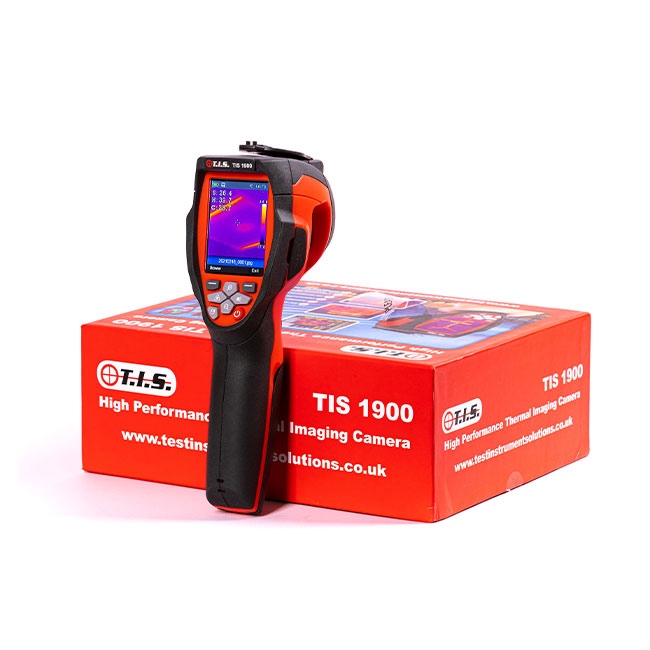
A thermal imaging camera is a portable handheld device which uses infrared thermography as a non-contact and non-invasive method of safely and accurately diagnosing electrical problems in a circuit. The thermal imaging camera can be used as part of a preventive maintenance schedule to routinely check circuits while they are operating, to establish whether excessive hot spots are being generated and which could lead to identifying an electrical issue.
How does thermal imaging identify electrical faults?
Thermal imaging cameras can identify hotspots in motors and in panels such as loose connections in a circuit breaker. These circuits and the problems they are experiencing are not visible and are not necessarily causing a service interruption, so cannot be detected.
A user can point a thermal imaging camera at a motor or a panel and will be presented with a colour spectrum on a hi-resolution digital screen, which indicates where radiating temperatures are excessive or not. The thermal imaging camera has a built-in sensor which picks up the infrared spectrum that is invisible to the human eye, and using image-capturing software is able to present a real-time image to the user which indicates where hotspots are located and hence, where there could be an electrical fault. The colour spectrum on the screen will show a concentrated colour where hotspots are located and this will be significantly different to surrounding areas where identical components, operating in the same way without electrical faults, can be clearly distinguished.
The benefits of thermal imaging cameras
- Non-contact detection of electrical faults
- Proactive identification which enables preventive maintenance and fault-finding prior to equipment or circuit failure
- Images and temperature readings can be captured, stored, downloaded and shared as visual evidence of diagnosis
- Safety issues, downtime and repair costs are minimised by early detection
- Thermal imaging can be carried out under operation and doesn’t require equipment, systems and devices to be stopped or shut off for inspection.
Thermal imaging cameras, such as the TIS 1900 supplied by Test Instrument Solutions, provide a proactive and effective maintenance measure to improve safety and efficiency in your electrical systems.
Please note that this section is for information purposes only. Anyone using equipment referred to in this section must be suitably qualified and/or experienced within the respective field. If in doubt before use, please consult a qualified electrician or engineer & thoroughly read all instruction booklets.