Solar installations, also known as solar photovoltaic (PV) systems, are popularly found in both commercial and domestic properties. They are simple systems whereby a series of photovoltaic cells (solar panels) are connected in parallel and linked with an inverter and a battery. Like any other electrical installation, the system has to be commissioned to verify it has been designed and installed correctly, and its performance also has to be periodically tested and monitored. In addition to this, there are troubleshooting procedures required if/when there are operational problems with the system.
So test equipment is required for installation and commissioning procedures, for service and maintenance procedures and for breakdown and repair procedures. These testing processes verify that the system is installed safely and correctly and is operating and performing as per the design spec and the output expectations. They are also used to react to operational problems with the system.
What test equipment is required for solar installations?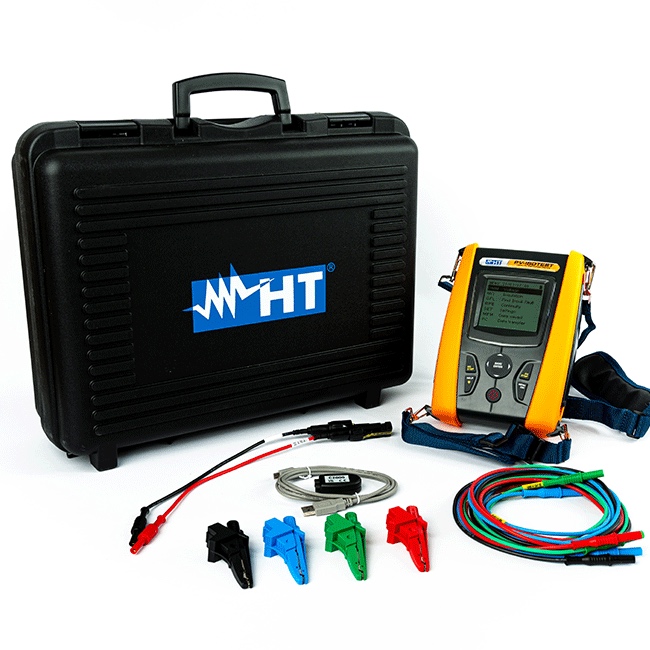
There are a series of tests required to verify the performance of a solar installation, which can be used at some or all of the testing stages outlined above. Generally, the tests required are:
- Continuity testing, voltage and current testing and insulation testing – these can be done at any stage to verify the safe and correct installation of the system.
- Commissioning testing in accordance with BS EN 62446 compliance -such as open circuit voltage & short circuit current tests, amongst others.
- Irradiance testing – this is usually done at the commissioning and servicing stages as it confirms that the system is absorbing the levels of radiance expected, ie. the system is performing as per the design space and the amount of electricity the user expects to be generated is being generated.
- Confirming the functionality of strings in a PV field – validating that these have been connected to the inverter correctly during the commissioning stage.
- I-V curve tracing – this is a common service and diagnostic test which effectively evaluates the performance of the PV system. It plots the relationship between electrical current and voltage across different loads, and is carried out in order to identify faults with or damage to the system, or to identify why a system isn’t performing (such as because of areas of shading from the sun, for example).
- Power analysis – this measures the power output of the solar panels and the system as a whole, and hence is a test performed at all necessary stages.
- Thermal imaging – this can be carried out at a troubleshooting stage to identify connection or performance issues.
Effective test equipment for solar installations
The most common test instrument used to carry out the full range of testing on solar installations is a multi-function tester, and particularly one that has solar PV functionality, such as the TIS PV-ISOTEST, supplied by Test Instrument Solutions. This instrument enables the user to carry out all the necessary checks for installation and commissioning, routine service and maintenance and troubleshooting processes with one single instrument. In the full range of specialist solar PV test equipment, you can also source individual instruments, such as an I-V curve tracer, an irradiance meter, a current and voltage multi-tester, a solar PV clampmeter and a thermal imaging camera.
Choosing the right test equipment for your needs should be based on:
- Specifications and test capabilities
- Reliability and a high quality of performance accuracy
- A good standard of safety features
- User-friendly, particularly for a series of repeated tests
- Robust and easy to carry
Check out the range of solar PV test equipment at Test Instrument Solutions.
Please note that this section is for information purposes only. Anyone using equipment referred to in this section must be suitably qualified and/or experienced within the respective field. If in doubt before use, please consult a qualified electrician or engineer & thoroughly read all instruction booklets.