The conductive metal in a length of electrical wire is one of the most important components of an electrical installation. It is essential that this material is located in a wire when repairing devices, installing new wiring systems and creating connections between electrical components. The insulating material around this conducting metal is of course there to protect people from the conducting currents, but wire stripping is the essential practice of removing this insulating material to expose the conducting metal underneath. It is a fundamental skill of the electrical contractor and for this purpose they would use a wire stripping tool.
Wire stripping is therefore important because:
- It provides the conditions to create electrical conductivity.
- It enables a secure and reliable connection between wires and connectors or to terminals.
- It allows the electrical contractor to assess the condition of a wire and identify any issues when dealing with a fault or repair.
Understanding the wire stripping tool
A wire stripping tool is a simple handheld tool which has the purpose of carefully removing the insulation from the end of a length of electrical wiring, and thus enabling a second wire, a connector or a terminal to be attached. An exposed conducting wire is required to enable the practice of crimping, splicing or soldering.
So wire stripping tools are a standard feature of an electrician’s toolbox and can also be used by DIY enthusiasts with a level of competence in electrical work. Wire stripping is a common, everyday task in electrical installation and repair work, but a wire stripping tool is a specialist piece of equipment and performs this task much better and more safely than other tools, such as a knife.
Standard wire strippers have a pair of opposing blades which are capable of cutting through insulating material, but are designed to leave the conducting material intact. Some models will have adjustable settings to enable work with wires of a different gauge. You can also get more precise wire strippers, which can be set to ensure precise cutting depths, such as when working with very small gauge wires. You can also get self-adjusting wire strippers, which automatically adjust to the cutting depth required for the wire gauge being faced. These remove the need for manual adjustments and are ideal in situations where lots of different wire gauges are present and speed and accuracy are important.
Why using a good wire stripping tool is important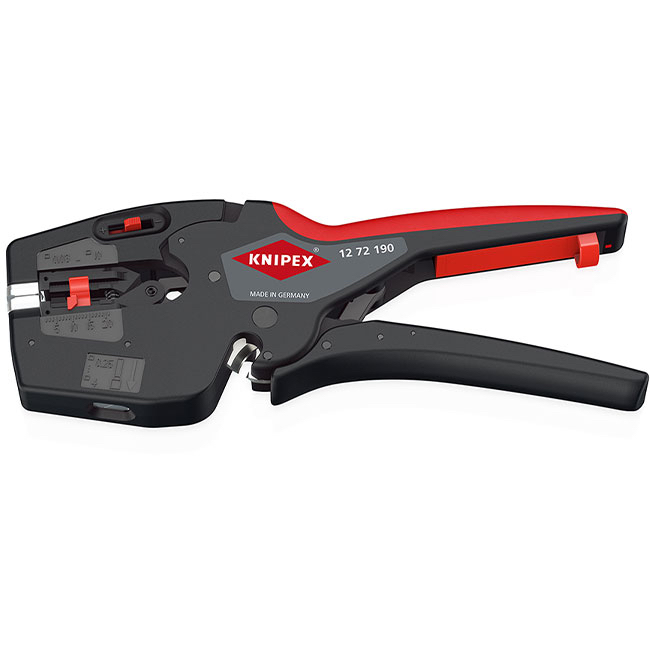
Using a good quality wire stripping tool, such as the KNIPEX KN 12 72 190 or the KNIPEX KN 12 62 180 supplied by Test Instrument Solutions, is important because:
- Electrical wires are thin and vulnerable to damage, particularly when removing the insulation.
- Some thicker cabling has a plastic sheath covering multiple individually sheathed wires within it, so a specialist tool such as a wire stripping tool is required to detect this and carefully access the conducting material.
- If wiring is damaged during this process it could cause dangerous electrical faults.
It is essential that you take suitable safety precautions when working with a wire stripping tool. These should include:
- Disconnecting power from the wires and the circuit.
- Wearing appropriate protective gear.
- Inspecting the wires for signs of damage before stripping them.
- Use the wire stripping tool properly. This means choosing the right setting for the wire gauge and not applying excessive force that could damage the wire.
Following these basic safety guidelines should ensure your wire stripping tool performs an effective job in safe conditions, and that you can expose the conducting material you need to.
Please note that this section is for information purposes only. Anyone using equipment referred to in this section must be suitably qualified and/or experienced within the respective field. If in doubt before use, please consult a qualified electrician or engineer & thoroughly read all instruction booklets.