Test leads are much more than an accessory and are an essential element of safe, accurate and reliable electrical testing. They are an insulated cable assembly which connects a test instrument – such as a multimeter, clamp meter or installation tester – to the circuit under test. Test leads are also sometimes known as test probes, because the lead itself is the link between the instrument and a probe tip, hook or clip which operates at the working end and which physically connects to the circuit. Test leads are essentially a collection of cables, but are safety-rated components of an electrical testing system and therefore need to selected and maintained carefully in order to ensure safety and compliance.
Physically, a test lead will usually have a 4mm banana plug at one end, but could have a variety of connectors at the working end. If you find that a test lead is poor quality, damaged or worn, or is not the correct rating, this can cause inaccurate readings in your tests, but could also present a safety hazard and a risk of electric shock.
Considerations when choosing a test lead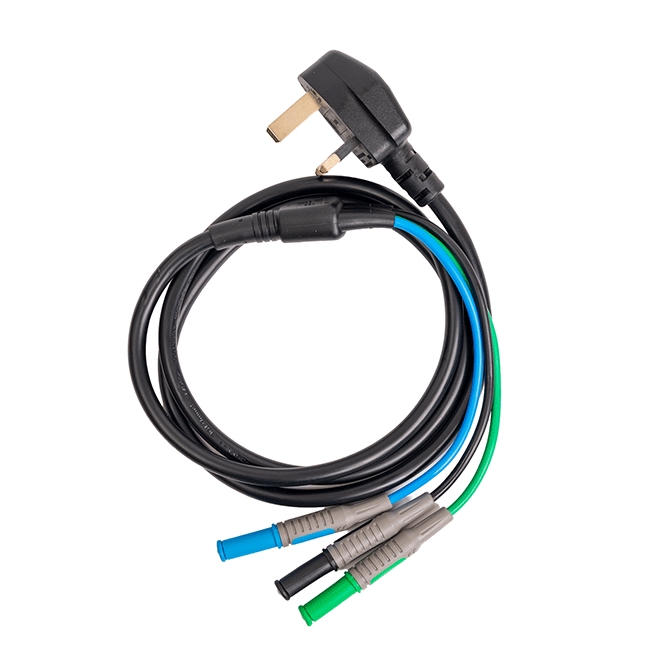
The important factors to consider when choosing a test lead for your electrical testing include:
- Choose the right CAT rating
CAT rating is an electrical safety classification defined by the IEC standards, and it defines the ability of an instrument to withstand sudden voltage spikes in certain electrical environments. CAT ratings are generally split into four categories:
CAT l – For low-energy, isolated circuits, such as laptops or battery-powered devices
CAT ll – For household appliances, portable tools and standard wall outlets
CAT lll – For electrical distribution panels, circuit breakers, lighting circuits and industrial equipment
CAT lV – Such as main power lines, overhead drops or electricity meters
Test leads carry a CAT rating which allow you to choose leads which are equal to or higher than the electrical environment you are testing, otherwise dangerous safety risks will arise.
- Check for regulatory compliance
Test leads used in the UK should conform with the requirements of HSE GS38 (Electrical test equipment for low voltage electrical systems). These are guidelines which require the test leads to carry features such as finger guards, a limit to exposed metal in order to avoid accidental short circuits and built-in fuses or current-limiting resistors, which protect against short circuits.
Suitable test leads will have a wire gauge and insulation to ensure safety and good durability. The material of the test lead insulation needs to be flexible and able to withstand all environmental conditions, this is usually a silicone material.
It is essential that the test leads are compatible with your test instrument, and this is usually established by checking the connector side of the lead physically fits the terminals of the instrument to create a firm connection. As mentioned above, most test leads on the market today feature a 4mm shrouded banana plug connection which is compatible with most test instruments.
Before using any test lead, the user should check the lead for cracks or nicks or any sign of physical damage, which can cause inaccurate readings and safety hazards.
At Test Instrument Solutions we can supply a wide range of test leads for various testing applications.
Please note that this section is for information purposes only. Anyone using equipment referred to in this section must be suitably qualified and/or experienced within the respective field. If in doubt before use, please consult a qualified electrician or engineer & thoroughly read all instruction booklets.