If you have a responsibility to use test instruments to verify the safe and correct installation of an electrical system, then it is essential that you choose the right test equipment. This will depend on the specific applications you are involved in. In general you will be looking for test equipment to cover your regulatory requirements so that you are fully compliant, but you also want test equipment to be practical, effective and easy to use.
Many of the tests an electrical tester is involved with are repetitive, and require a high degree of accuracy. Such tests can also involve high and low voltages. It is common for an electrical installation to require multiple different tests along these lines, so test equipment usually needs to be versatile and have user-friendly features, but also a high level of accuracy and reliability. On some occasions, however, you may only be required to carry out one specific test, and the same test repetitively. So this goes some way to explaining the main difference between a single-use instrument and a multifunction instrument.
What is a multifunction tester?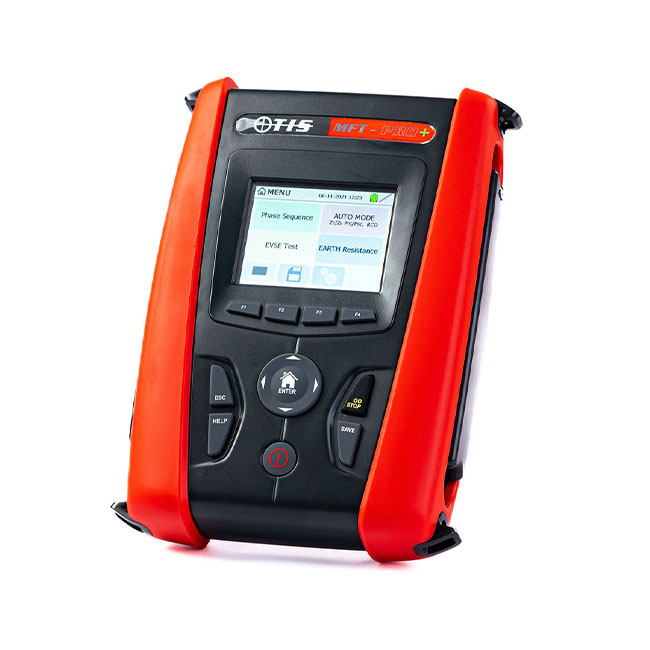
A multifunction tester is commonly used by most electrical testers. As the name suggests, it covers a number of standard tests in one instrument, such as tests for voltage, continuity, insulation resistance, Loop impedance, polarity, RCD performance, phase sequence and voltage drop. If you are performing a number of tests in sequence on an installation, therefore, it is helpful to use a multifunction tester so you are not needing to swap between different instruments all the time.
The MFTPro supplied by Test Instrument Solutions, for example, has easy menus and set-up features which enable you to switch between test programmes quickly and so that all results can be performed, and their results viewed, stored and shared, using the same instrument and digital screen. This saves considerable time and maintains accuracy.
What is a voltage tester?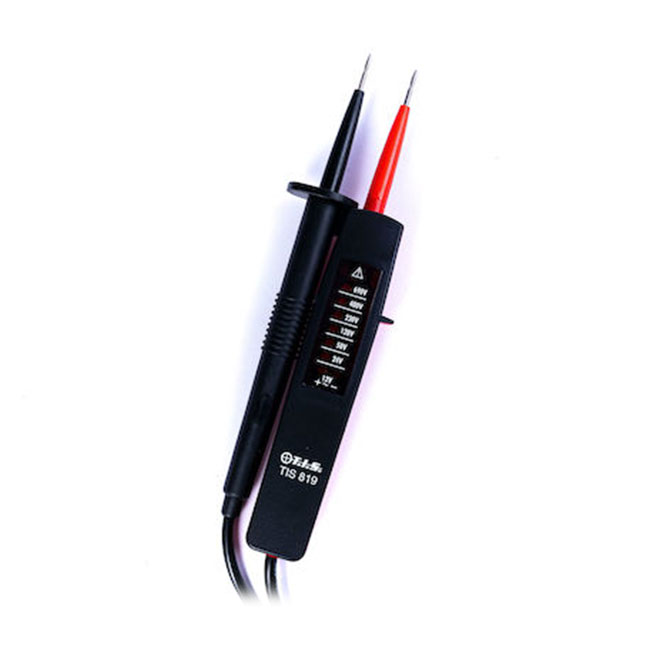
A voltage tester is an example of a single-function tester which is a specialist instrument for one specific test. Other examples are insulation and continuity testers. A voltage tester is suitable where only this one single test is required and there are fewer time considerations because the whole installation doesn’t need verifying with various other tests. Therefore, the electrical tester is perhaps more comfortable swapping between different instruments.
An electrical tester would use a voltage tester to detect the presence, or otherwise, of voltage in a circuit , cable or wire. It is a simple, handheld device which provides an audible signal and a visual reading of the presence of voltage, therefore confirming whether a circuit is working correctly or is live or safe to touch. There are two common types of voltage tester, a non-contact voltage tester, which looks like a pen and detects voltage using an electromagnetic field, therefore not requiring contact with a potentially live wire or circuit. The second type is a two-pole voltage tester which uses two physical probes to directly touch the electrical components in question, and therefore uses contact to detect if voltage is present.
The difference between a voltage tester and a multifunction tester
It is not the case that a single-function tester carries out a test more accurately than a multifunction tester. Both types of instrument will perform high quality tests with accurate and reliable results. The main difference is that a multifunction tester performs a far higher number of other tests and therefore will be more expensive, but also more compatible for a tester performing a high number of different tests on an electrical installation. So a voltage tester performs a single test to check for the presence of electrical voltage, while a multifunction tester performs a series of tests and is therefore able to confirm safety and compliance checks on an entire electrical installation. It therefore also follows that a voltage tester is pocket-sized and easy to carry and use, while a multifunction tester is more bulky and more complex in terms of set-up and menu navigation.
Check out our ranges of multifunction testers and voltage testers at Test Instrument Solutions.
Please note that this section is for information purposes only. Anyone using equipment referred to in this section must be suitably qualified and/or experienced within the respective field. If in doubt before use, please consult a qualified electrician or engineer & thoroughly read all instruction booklets.