There are a number of factors which can impact on the efficiency and accuracy of a test instrument, and often without the user being aware of it. Test instruments are often used in industrial environments where conditions and impact damage can affect them, while general wear and tear also starts to have an influence over accuracy and reliability. Instruments can also experience a natural drift in their readings through aging.
It is essential that readings and measurements provided by a test instrument can be relied upon. These readings will be critical in making decisions. It is also necessary from a compliance point of view to ensure that readings from a test instrument are precise and accurate, and calibration is how we achieve and demonstrate this.
What is calibration?
Calibration is the process of periodically taking an instrument out of general use in order to verify its accuracy. This is done by checking the readings provided by the instrument against known standards, and confirming that the readings are accurate within acceptable tolerances also dictated by these standards. Where readings are found to be outside of acceptable tolerances, the instrument can be reconfigured and adjusted in order to reset the instrument and correct any drift in the accuracy of the readings. It is also common for the calibration process to include a clean and service of the instrument at the same time.
An instrument should not be released back into general use until it can be verified that its readings comply with the relevant standards.
Why is calibration important?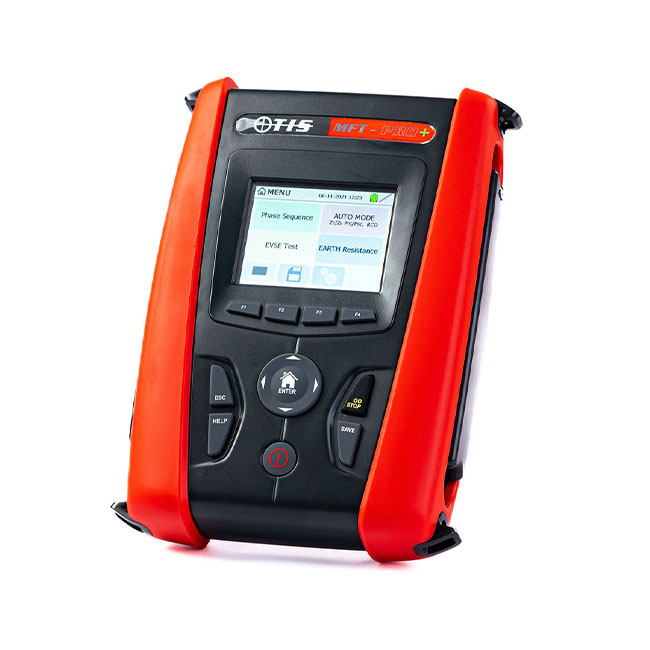
In electrical testing, test instruments are used to provide measurements and readings upon which critical decisions are made relating to diagnosis, confirmation or how an electrical installation will proceed. An instrument providing inaccurate results could compromise the safety of a user, or people working or occupying a building. Test instruments are delicate devices and the accuracy of their results is essential. In general use, they can be subjected to knocks, extreme temperatures, electrical surges and extended use over a long period of time. This all contributes to the potential for readings to drift and become unreliable. And even if they don’t, compliance regulations dictate that we have to check and verify that the readings are still accurate, because the consequences of not doing so could be very serious.
How does calibration work?
Usually, a business will maintain an itinerary of its test instruments and this will include identification numbers, where the instrument is stored or located and then information such as when service and maintenance is due, when PAT testing is due and when calibration is due. These records will be consulted in order to manage the calibration process, and a system should be set-up with suitable notifications so that no test instruments fall out of calibration, as no instrument should be used if a calibration date has passed. A decision should also be made as to the frequency of calibration. This should take into account various factors, including:
- Manufacturer’s recommendations
- Regulatory requirements
- Frequency of use
- Where the instrument is stored
- The environment in which the instrument is used
- The critical nature of the readings in terms of safety hazards
So an instrument could be calibrated annually, six-monthly, monthly, weekly, daily or even before each use, depending on one or more of these factors.
When an instrument is calibrated it is usually a requirement to confirm a certain accuracy on a certain range. This will be dictated either by the instrument manufacturer or a regulatory standard. The instrument will be tested at multiple points on that range to verify that the readings provided by the instrument are within an acceptable accuracy tolerance. These results will be recorded along with the date the calibration was carried out, and the instrument will be identified as having passed calibration. When the instrument is released back into general use it will also be identified with when its next calibration date is due. If an instrument fails calibration, it must be rectified until acceptable results can be verified, and shouldn’t be released back into general use until this happens.
Full calibration service at Test Instrument Solutions
At Test Instrument Solutions we can offer an accredited calibration service which enables us to calibrate your test instruments and ensure you remain fully compliant with your regulatory requirements.
Please note that this section is for information purposes only. Anyone using equipment referred to in this section must be suitably qualified and/or experienced within the respective field. If in doubt before use, please consult a qualified electrician or engineer & thoroughly read all instruction booklets.