Diagonal cutters - also known as side cutters – are a type of tool used in electrical installation to cut electrical cables. With electrical work it is essential that wires and cables are cut cleanly and with precision, but diagonal cutters work slightly differently to a tool such as cable shears, for example, as they cut the wire by creating an indentation and the tool then wedges the wire apart. This is different to the shearing force used by cable shears but still performs a suitable cut.
The importance of achieving a clean cut with electrical wires and cables
Electrical wires and cables are components known as conductors, because they carry electrical current. When they are cut it is important that the remaining material still has this ability, so you wouldn’t use a standard pair of wire cutters and certainly not scissors, because these can crush the remaining components of the wire or cable as the cut won’t be clean and precise. This can also lead to the wire or cable fraying and becoming further damaged.
Diagonal cutters are therefore a specialist electrical tool for achieving a clean and precise cut, which improves the ongoing electrical connection of the wire or cable, and maintains safety standards.
How diagonal cutters work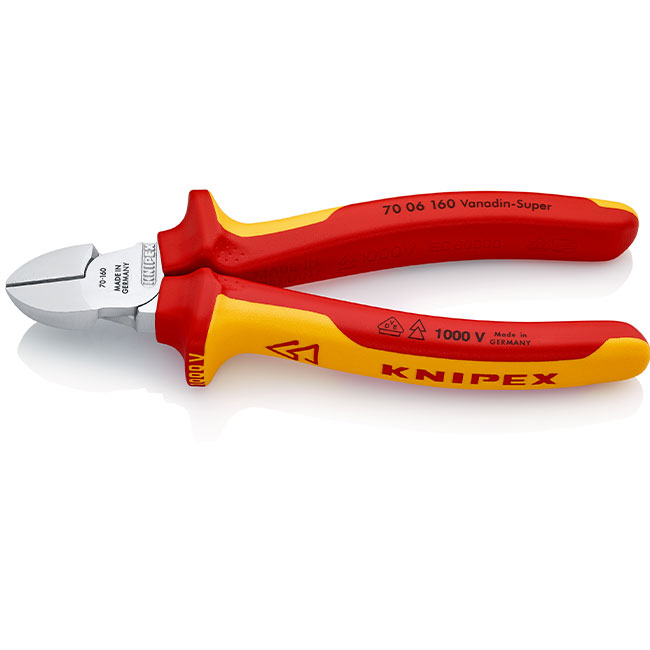
Diagonal cutters work using a two-step process, firstly indenting the wire and then wedging the wire apart. This is achieved by the cutting edges of the jaws being set an angle, hence the name diagonal cutters, or indeed side cutters. These cutting edges are precisely angled for the specific purpose of achieving the clean cut that an electrician needs. This indentation and wedging motion achieves a clean cut with less manual effort than the shearing action used by cable shears, for example.
It is important to learn about the features of diagonal cutters as this will help the user understand how they work:
- Not pliers - The jaws of the cutters are not designed to be used like pliers, ie. to grip and hold a wire before cutting it. You would perhaps use a pair of combination pliers for this task.
- Tight spaces - The smaller and specialised jaws of the diagonal cutter make them ideal for working in smaller, tighter spaces, which are often encountered by electrical contractors.
- Additional force - The angled edge of the two jaws enable the diagonal cutter to apply additional force to achieve a cleaner cut, even on thicker wires and cables.
- Long-lasting - The jaws of the cutter are made from hardened materials and are often chrome plated. This makes them durable, robust and good value for money.
- Insulated for safety - The handles of a diagonal cutter should be insulated, to protect the user from possible electric shock. You will be working with conducting materials and it is possible that some wires may still be conducting live current, although of course you should take suitable precautions to prevent this.
Quality diagonal cutters from Test Instrument Solutions
At Test Instrument Solutions we can supply a range of diagonal cutters manufactured by KNIPEX, one of the leading electrical tool manufacturers in the industry.
Please note that this section is for information purposes only. Anyone using equipment referred to in this section must be suitably qualified and/or experienced within the respective field. If in doubt before use, please consult a qualified electrician or engineer & thoroughly read all instruction booklets.